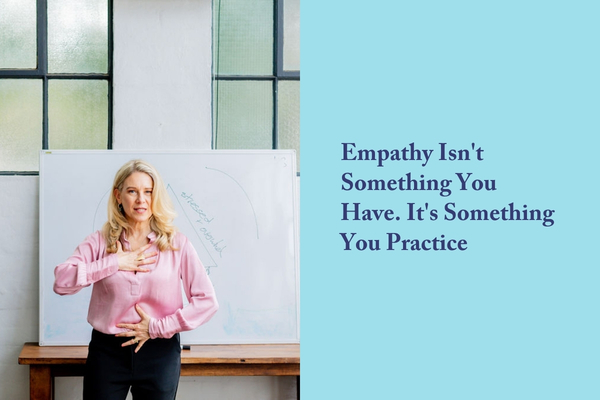
Empathy Isn't Something You Have. It's Something You Practice.
Do you actually know how the people around you think?
Not what they think. How they think.
There's a difference and it matters more than most leaders realise.
We tend to assume that smart, capable people in the same room, looking at the same problem, will reach broadly similar conclusions. But they won't. Not because someone is wrong, but because we each process the world through a fundamentally different cognitive lens.
One person sees a strategic risk. Another sees an implementation gap. A third feels the human cost before the numbers even land. A fourth is already three steps ahead, imagining what's possible if the problem is reframed entirely.
Same room. Same information. Four completely different experiences of it.
This is where empathy gets interesting for leaders - and where most leadership conversations stop too soon. We talk about empathy as feeling what others feel. But there's another form of it: understanding how others think.
Cognitive empathy is the capacity to step into another person's mental frame - to understand what they prioritise, what they find credible, what triggers their concern, and how they arrive at conclusions. It doesn't require you to agree with them. It requires curiosity.
And here's the uncomfortable truth: under pressure, that curiosity is usually the first thing to go. When our thinking narrows, so does our ability to take in perspectives that differ from our own. Which is precisely when empathy matters most.
So what can you actually do about it?
Notice your own lens first. You can't truly understand how others think until you understand how you think and where your blind spots are. What do you instinctively trust: data, process, relationships, or possibility? When do you feel most misunderstood? The answers are revealing. I use Whole Brain Thinking® and the HBDI® with my clients precisely because it makes these patterns visible in a way that reduces defensiveness and opens genuine curiosity.
Resist the urge to translate. When someone raises a concern that feels tangential to you, don't immediately convert it into your language. Sit with it. Ask a question. What you experience as "off topic" is often a perspective your thinking style naturally deprioritises, which is exactly why it's worth exploring.
Deliberately seek out the unfamiliar. Read widely - especially stories about lives and experiences different from your own. Step into environments where you're a beginner again. The humility that comes from not knowing is one of the fastest pathways to empathy.
Listen for what's underneath. In conversations, pay attention not just to what people say but to what they're protecting or prioritising. Scepticism is often a signal that someone needs more rigour. Pushback on process usually means someone is worried about follow-through. Emotional intensity frequently signals that relational stakes are higher than you've recognised.
Ask the perspective question. Before key conversations, take sixty seconds to ask yourself: how is this person likely to be experiencing this situation? What matters most to them right now? It sounds simple. It changes everything.
Empathy isn't a personality trait you either have or don't. It's a discipline - one that becomes more valuable, and more demanding, the higher the pressure around you.
The leaders who navigate uncertainty best aren't the ones with the clearest view of the answer. They're the ones who stay curious about how others are seeing the question.
If you'd like to explore this in your team, including through HBDI®, I'd love to have a conversation.
With love
Sue