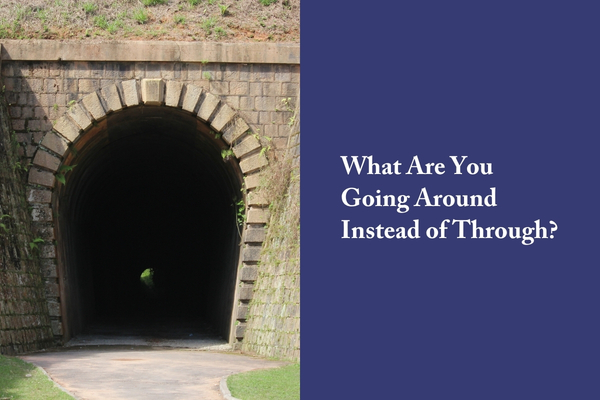
What Are You Going Around Instead of Through?
You know that children's book, We're Going On A Bear Hunt?
My girls loved it when they were little. We'd act it out at birthday parties in Centennial Park - me leading the singing and skipping through the park, my husband hiding in the trees to jump out and terrify the children. (If yours was one of them, I'm still sorry.)
The story follows a group of children who keep encountering obstacles - long grass, a cold river, thick mud. And every time, they reach the same conclusion:
"We can't go over it. We can't go under it. Oh no! We've got to go through it."
I've been thinking about this a lot lately, particularly in the context of the emotional agility work I've been sharing with you over the past few weeks.
Because here's the thing: understanding emotional agility is relatively straightforward. Practising it, in real time, under pressure, when you're hooked by a story and your instinct is to react? That's the long grass. That's the cold river. That's the mud.
There is no shortcut. You can't think your way around it. You have to go through it.
That might look like staying in a difficult conversation rather than doubling down on your position. It might be sitting with the discomfort of uncertainty instead of rushing to resolve it. It might be noticing - mid-reaction - that the story you're telling yourself isn't the whole truth, and choosing something different.
As one of my clients said after a particularly uncomfortable conversation with her CEO: "It was hard. But it felt really powerful."
That's what going through it looks like. Not graceful. Not seamless. But meaningful.
So here's my question for you this week:
What's the obstacle you're going around, or waiting to feel ready for, rather than going through?
The children in the story weren't brave because they were fearless. They were brave because they went through it together.
That's what good coaching creates: a space where you can name the obstacle out loud, without judgement, and figure out what "going through it" actually looks like for you. And if you're part of a peer group, even better. Hearing that others are wading through the same mud makes the whole thing considerably less terrifying.
If you're ready to stop going around it, I'd love to be part of your support crew. Let's talk.
With love
Sue